Why the Right Racking System Is More Than a Storage Expense
When evaluating a new storage system, many companies focus primarily on upfront costs. But industrial racking is more than a line-item expense — it’s an operational investment that can improve efficiency, reduce waste, support safety initiatives, and create measurable long-term savings.
The challenge is that many of those savings are hidden inside everyday operations. Forklift travel time, damaged inventory, production bottlenecks, and inefficient layouts all quietly impact profitability over time.
Calculating storage system savings helps facilities understand the true financial impact of upgrading their racking infrastructure and creates a clearer business case for investment.
Use Scenario Modeling to Build a Stronger Business Case
When calculating storage system savings, many organizations benefit from using conservative, moderate, and aggressive savings scenarios, as detailed below. This approach helps organizations to:
- Build internal credibility
- Reduce perceived investment risk
- Support budget and leadership discussions
- Demonstrate both short- and long-term value
At the end of the day, if a project delivers strong returns under conservative assumptions, the investment often becomes easier to justify to the powers that be.
Start With Labor Efficiency
One of the largest opportunities for savings comes from improving labor efficiency. Modern racking systems help optimize material flow, reduce unnecessary movement, and improve inventory accessibility.
Facilities often see improvements through:
- Reduced forklift travel
- Faster staging and retrieval
- Improved slotting and organization
- Less double handling
- Reduced aisle congestion
Rather than thinking in terms of labor elimination, it’s more accurate to measure how effectively labor is being utilized. An additional consideration is the cost of an unsafe environment. If employees get injured due to outdated or unsafe storage situations, there are insurance claim costs, rising insurance coverage rates, and, of course, the need to add resources or reallocate existing ones to cover the injured employee.
A simple starting point is to calculate the percentage improvement in labor efficiency relative to your current annual labor costs. Even modest gains can create meaningful annual savings in high-volume operations.
Annual Labor Efficiency Savings Formula
Annual Labor Efficiency Savings = Current Annual Labor Cost × (Labor Efficiency % ÷ 100)
For example, if a facility has annual labor costs of $500,000:
| Scenario | Labor Efficiency Improvement | Annual Savings |
| Conservative | 8% | $40,000 |
| Moderate | 15% | $75,000 |
| Aggressive | 25% | $125,000 |
Factor in Inventory Damage Reduction
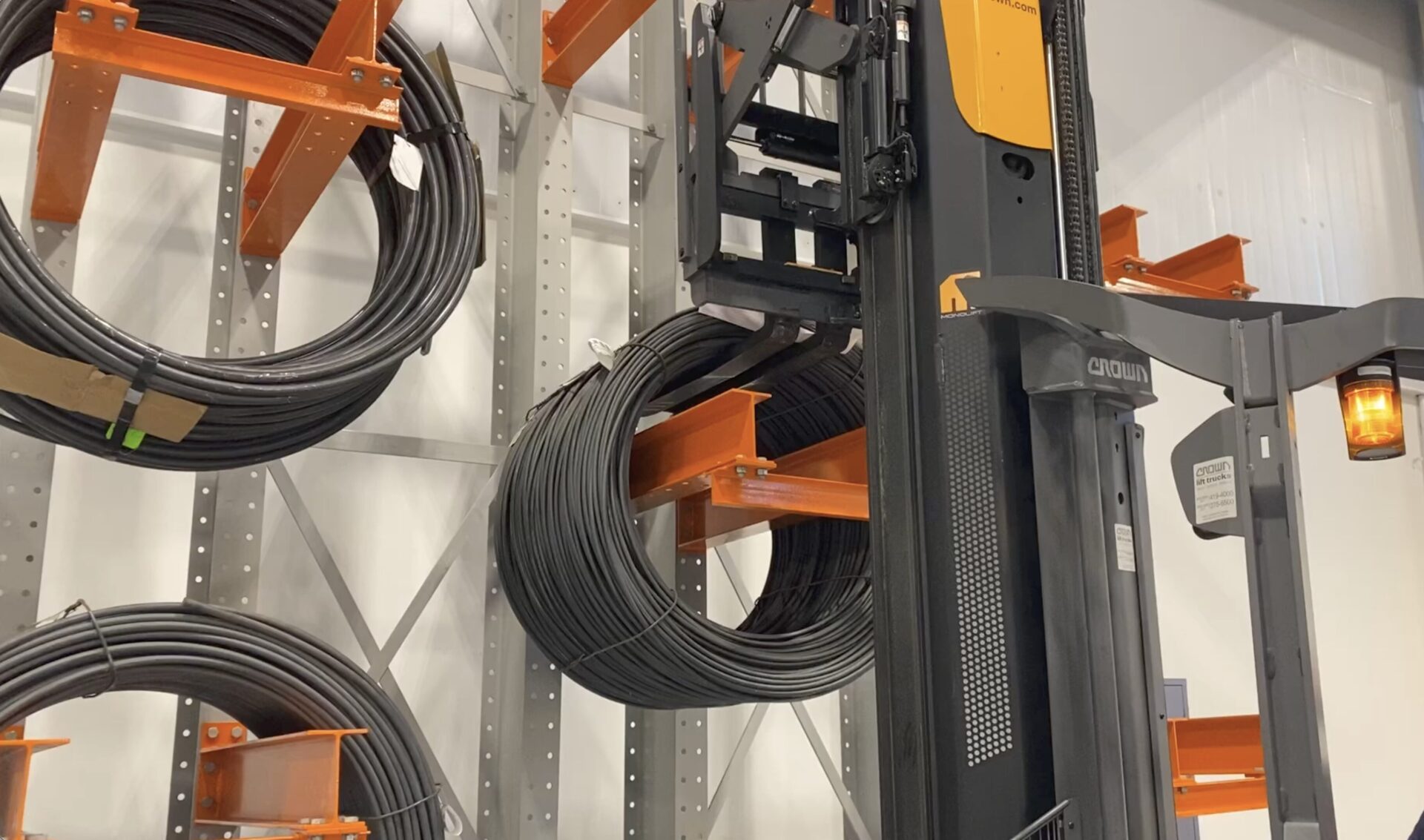
Outdated or inefficient storage systems can contribute to product damage, material deformation, and avoidable scrap. In industries handling steel, coils, lumber, sheet goods, or other heavy materials, improper storage can become a significant hidden cost.
Modern racking systems designed for specific load requirements help reduce:
- Material damage
- Product loss
- Rework
- Safety incidents caused by unstable storage
- Costs associated with damaged inventory handling
Damage reduction is often underestimated during budgeting discussions, but over several years, these savings can become substantial.
Annual Damage Savings Formula
Annual Damage Savings = Current Annual Damage Cost × (Damage Reduction % ÷ 100)
For example, if a facility experiences $120,000 in annual inventory damage costs:
| Scenario | Damage Reduction | Annual Savings |
| Conservative | 15% | $18,000 |
| Moderate | 25% | $30,000 |
| Aggressive | 40% | $48,000 |
Evaluate Downtime and Bottlenecks
Storage inefficiencies also impact throughput. Time spent searching for material, navigating congested aisles, or working around poorly organized inventory slows operations and affects production capacity.
Facilities should consider:
- How often operators wait for material access
- Time lost to blocked aisles
- Delays caused by disorganized inventory
- Production interruptions are tied to storage limitations
Even small reductions in downtime can create measurable operational improvements, particularly in high-throughput manufacturing environments.
Downtime Savings Formula
Downtime Savings = Downtime Hours × Cost per Hour × (Downtime Reduction % ÷ 100)
For example: 200 downtime hours annually, $2,000 cost per downtime hour, Annual downtime cost = $400,000
| Scenario | Downtime Reduction | Annual Savings |
| Conservative | 10% | $40,000 |
| Moderate | 20% | $80,000 |
| Aggressive | 30% | $120,000 |
Look Beyond Year-One ROI
While the payback period is important, storage systems should be evaluated as long-term infrastructure investments.
High-quality industrial racking systems are designed to provide years of performance while reducing maintenance requirements and supporting future scalability. Over a three- to five-year period, many facilities find that operational savings significantly outweigh the initial investment.
Additional long-term financial benefits may include:
- Better space utilization
- Deferred facility expansion costs
- Reduced maintenance expenses
- Improved safety compliance
- Lower risk of inventory loss
- Greater operational flexibility as business needs evolve
Once labor, damage, and downtime savings are estimated, facilities can calculate the total annual operational benefit.
| Scenario | Labor Efficiency Improvement | Damage Reduction | Downtime Reduction | Annual Savings |
| Conservative | $40,000 | $18,000 | $40,000 | $98,000 |
| Moderate | $75,000 | $30,000 | $80,000 | $185,000 |
| Aggressive | $125,000 | $48,000 | $120,000 | $293,000 |
Let’s assume a total investment in the storage system of $250,000.
ROI Formula
Racking ROI = (Total Annual Benefit − Investment) ÷ Investment × 100
Payback Formula
Racking Payback = Investment ÷ Total Annual Benefit
| Scenario | Annual Benefit | Year-One ROI | Payback Period |
| Conservative | $98,000 | -60.8% | 2.55 Years |
| Moderate | $185,000 | -26.0% | 1.35 Years |
| Aggressive | $293,000 | 17.2% | 0.85 Years |
While first-year ROI may appear modest under conservative assumptions, industrial racking systems are long-term infrastructure investments designed to deliver value over many years.
Multi-Year Net Benefit Formula
Racking Multi-Year Benefit = (Annual Benefit × Years) − Investment
| Scenario | 3-Year Net Benefit | 5-Year Net Benefit |
| Formula | (Annual Benefit × 3) − Investment | (Annual Benefit × 5) − Investment |
| Conservative | $44,000 | $240,000 |
| Moderate | $305,000 | $675,000 |
| Aggressive | $629,000 | $1,215,000 |
Even under conservative assumptions, strong long-term returns often emerge.
Investing in Operational Efficiency
A storage system is more than steel and shelving. The right racking solution supports operational flow, improves safety, protects inventory, and helps facilities maximize available space and labor resources.
By calculating the impact of labor efficiency, damage reduction, downtime improvements, and long-term operational savings, businesses can make more informed decisions about their storage infrastructure investments.
To learn more about how our industrial racking systems can be specifically designed to improve your organization’s efficiency and long-term performance, don’t hesitate to get in touch with our team for a consultation.