
Warehouse safety standards are often discussed in broad terms, but few regulations are referenced as frequently as OSHA 1910.176. Despite its frequent appearance in safety conversations and inspections, many facilities still misunderstand what the standard actually requires, especially regarding storage systems and pallet racking.
Why OSHA 1910.176 Matters in Modern Warehouses
At its core, OSHA 1910.176 focuses on one simple idea: stored materials should never create a hazard. The regulation falls under OSHA’s Material Handling and Storage standards and outlines requirements for safe clearances, secure storage, housekeeping, and safe movement throughout warehouse environments.
That has direct implications for warehouses and manufacturing facilities, including racks, shelving systems, aisles, and day-to-day operations.
One of the most important sections of the regulation states that materials stored in tiers must be stacked, blocked, interlocked, and limited in height so that they are stable and secure against sliding or collapse. In practical terms, this means facilities must ensure their racking systems are properly designed, maintained, and used according to capacity limits and intended applications.
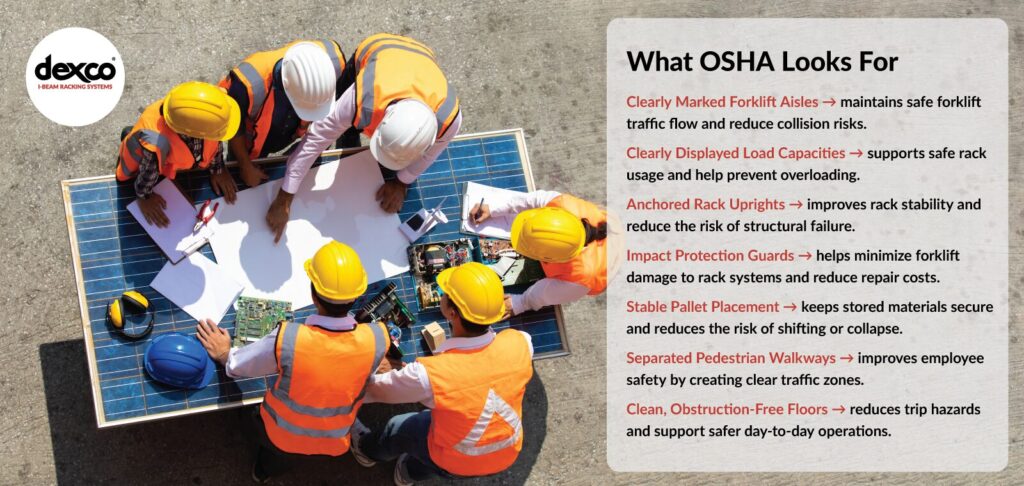
Compliance goes beyond simply installing racks. OSHA also requires aisles and passageways to remain clear and appropriately marked, especially in areas where forklifts or other mechanical handling equipment operate. Damaged rack components, overloaded shelves, obstructed aisles, and unstable pallet loads can all create conditions that violate the standard and, more importantly, increase the risk of injury.
In most facilities, OSHA compliance comes down to a combination of rack integrity, clear traffic flow, safe load handling, and organized storage areas.
What OSHA 1910.176 Compliance Looks Like in Practice
Common Storage Safety Risks Facilities Overlook
Housekeeping is another major component of OSHA 1910.176. Cluttered storage areas, loose materials, and blocked walkways are not just operational inefficiencies; they are safety hazards. Maintaining clean, organized storage areas helps reduce risks related to trips, falls, fires, and falling inventory.
The challenge for many facilities is that OSHA 1910.176 is intentionally broad. The regulation does not provide detailed engineering specifications for every type of rack or storage application. Instead, OSHA often expects facilities to follow manufacturer guidelines, industry best practices, and recognized standards such as ANSI/RMI rack safety recommendations when evaluating whether storage systems are safe.
That is why regular rack inspections, employee training, load capacity labeling, and proper warehouse layout design are so important. Facilities should routinely inspect for damaged uprights, bent beams, missing anchors, overloaded pallets, or unsafe forklift traffic patterns. Even small issues can become major hazards if left unaddressed.
Building a Safer and More Efficient Storage Operation
A proactive storage safety strategy not only supports OSHA compliance but also helps facilities improve operational efficiency, reduce product damage, minimize downtime, and create a stronger long-term safety culture.
Ultimately, OSHA 1910.176 is about creating a warehouse environment where employees can work safely and efficiently every day. A well-designed storage system supports compliance, improves workflow, reduces product damage, and helps build a stronger overall safety culture.
Are you reviewing your storage needs and need to ensure OSHA compliance? If so, drop us a line and learn about how modern, custom storage solutions from Dexco can help you improve operational efficiency while being safe and compliant.


