Why Industry Standards Matter
When evaluating a racking system, it’s easy to focus on storage capacity, layout efficiency, or available floor space. But behind every safe and reliable rack system is something less visible: engineering standards.
In industrial environments, racking systems routinely support thousands of pounds of material. A failure doesn’t just risk damaged inventory; it can threaten employee safety, disrupt operations, and create costly downtime. That’s why the industry’s leading manufacturers rely on standards developed by the Rack Manufacturers Institute (RMI).
RMI standards help establish consistent guidelines for the design, testing, installation, and use of industrial racking systems. They provide a framework for ensuring racks can safely withstand the loads and operating conditions they encounter every day.
What Is the Rack Manufacturers Institute?
Let’s start with an introduction to the organization for those who may be unfamiliar. The Rack Manufacturers Institute (RMI) is an industry association that develops and promotes engineering standards for storage rack systems. Working alongside engineers, manufacturers, and safety experts, RMI helps create guidelines that improve safety and consistency across the material handling industry.
Many of the standards used throughout North America are developed through RMI and incorporated into ANSI-approved specifications. These standards address critical factors such as load capacity, structural performance, rack configuration, and inspection requirements. For facility operators, RMI standards provide confidence that a racking system has been designed using established engineering principles rather than assumptions or shortcuts.
How RMI Standards Influence Rack Design
Safe racking begins long before a rack is installed on a warehouse floor. It starts during the engineering and design process. RMI standards help guide decisions related to:
- Load Capacity – Every rack must be designed to support specific loads safely and consistently. Engineering calculations determine how weight is distributed throughout the structure and how individual components perform under stress.
- Structural Integrity – Columns, braces, arms, connections, and anchors must work together as a complete system. RMI standards establish performance expectations that help ensure racks maintain their structural integrity under normal operating conditions.
- Stability and Anchoring – A rack is only as strong as its connection to the floor. Proper anchoring, floor conditions, and load distribution all play a role in maintaining stability and preventing movement or collapse.
- Inspection and Maintenance – RMI standards also support ongoing safety by promoting regular inspections and maintenance practices. Damage from forklift impacts, overloaded arms, loose hardware, or shifting rack components can compromise safety if left unaddressed.
Standards Are the Starting Point, Not the Finish Line
Meeting RMI standards is an important part of designing a safe racking system. At Dexco, however, we view those standards as the starting point.
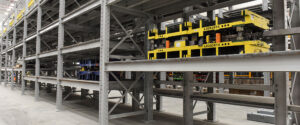
Industrial storage applications often involve heavier loads, longer materials, and more demanding operating environments than traditional pallet storage. That’s why our engineering approach extends beyond rack-specific standards to include the structural steel, welding, and material specifications commonly used in building and infrastructure design.
Dexco structural rack systems are engineered and manufactured in accordance with recognized standards, including:
- ANSI/AISC 360 – Specification for Structural Steel Buildings
- AWS D1.1/D1.1M – Structural Welding Code – Steel
- ASTM A572 – High-Strength Low-Alloy Structural Steel
- ASTM A36 – Carbon Structural Steel
- ASTM A325 – Structural Steel Bolts
- ASTM A992 – Structural Steel Shapes
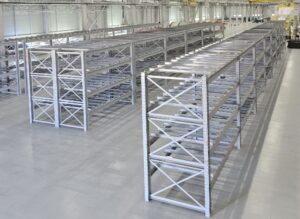
These standards govern how steel structures are designed, fabricated, welded, and assembled. Combined with heavy-duty structural steel construction and application-specific engineering, they help ensure every rack system is built to perform reliably under demanding industrial conditions.
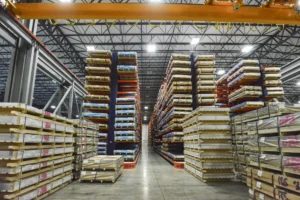
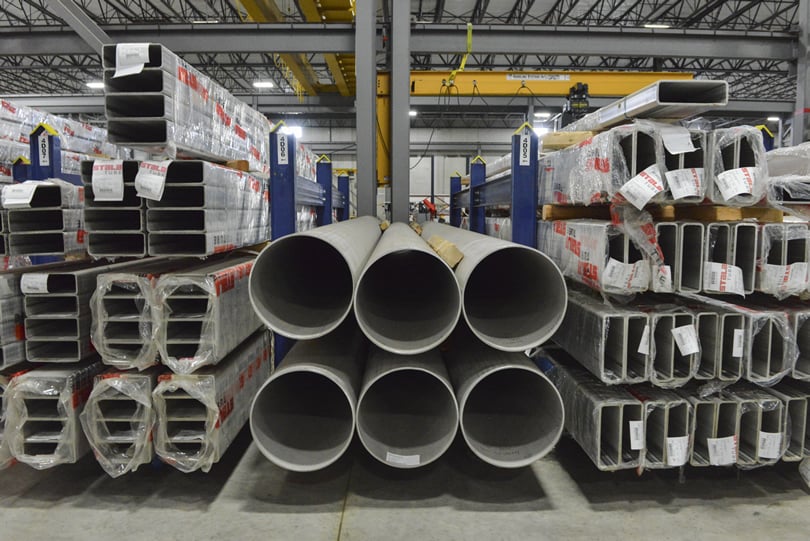
For customers storing steel, lumber, aerospace components, tubing, bar stock, or other heavy materials, that additional level of engineering can make a meaningful difference in long-term durability, safety, and performance.
Building Safety Into Every Rack
Safe storage is never the result of a single component or inspection. It comes from a combination of sound engineering, quality materials, proper installation, and ongoing, consistent maintenance.
At Dexco, RMI standards serve as a foundation for every system we design. We also engineer and manufacture our structural rack systems in accordance with recognized steel design, welding, and material specifications, including ANSI/AISC 360, AWS D1.1, and applicable ASTM standards.
Combined with heavy-duty structural steel construction, facility-specific engineering, and custom designs tailored to each customer’s operational requirements, these practices help deliver storage solutions built for long-term performance, durability, and safety.
When it comes to protecting employees, inventory, and operations, industry standards provide the foundation. Applying rigorous engineering and manufacturing standards throughout the process helps ensure the finished system performs as intended for years to come.