The annual Manufacturing Day celebration offers a chance to see where the industry is headed. Across the country, manufacturers, educators, and industry organizations will open their doors to students and communities, offering a closer look at modern manufacturing and the people building its future. This year, the day falls on October 2, with events continuing throughout the month.
Much of the industry conversation will naturally focus on what is new and cool: automation, robotics, advanced machinery, digital technologies, and the increasingly sophisticated skills needed to operate them.
But we here at Dexco would argue that there is another part of modern manufacturing that deserves attention: The factory floor itself.
The Physical Side of Modern Manufacturing
It’s easy to think of manufacturing innovation as something that happens inside a machine. A new robot can change how a part is assembled, or a new piece of equipment can increase production capacity, for example. Advances in software can even provide better visibility into what is happening across a facility. But the fact of the matter is that none of those technologies operate independently of the physical environment around them.
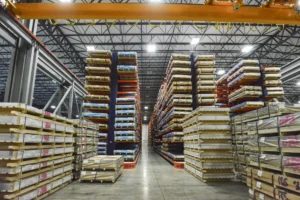
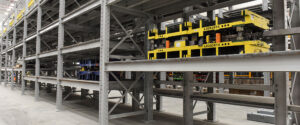
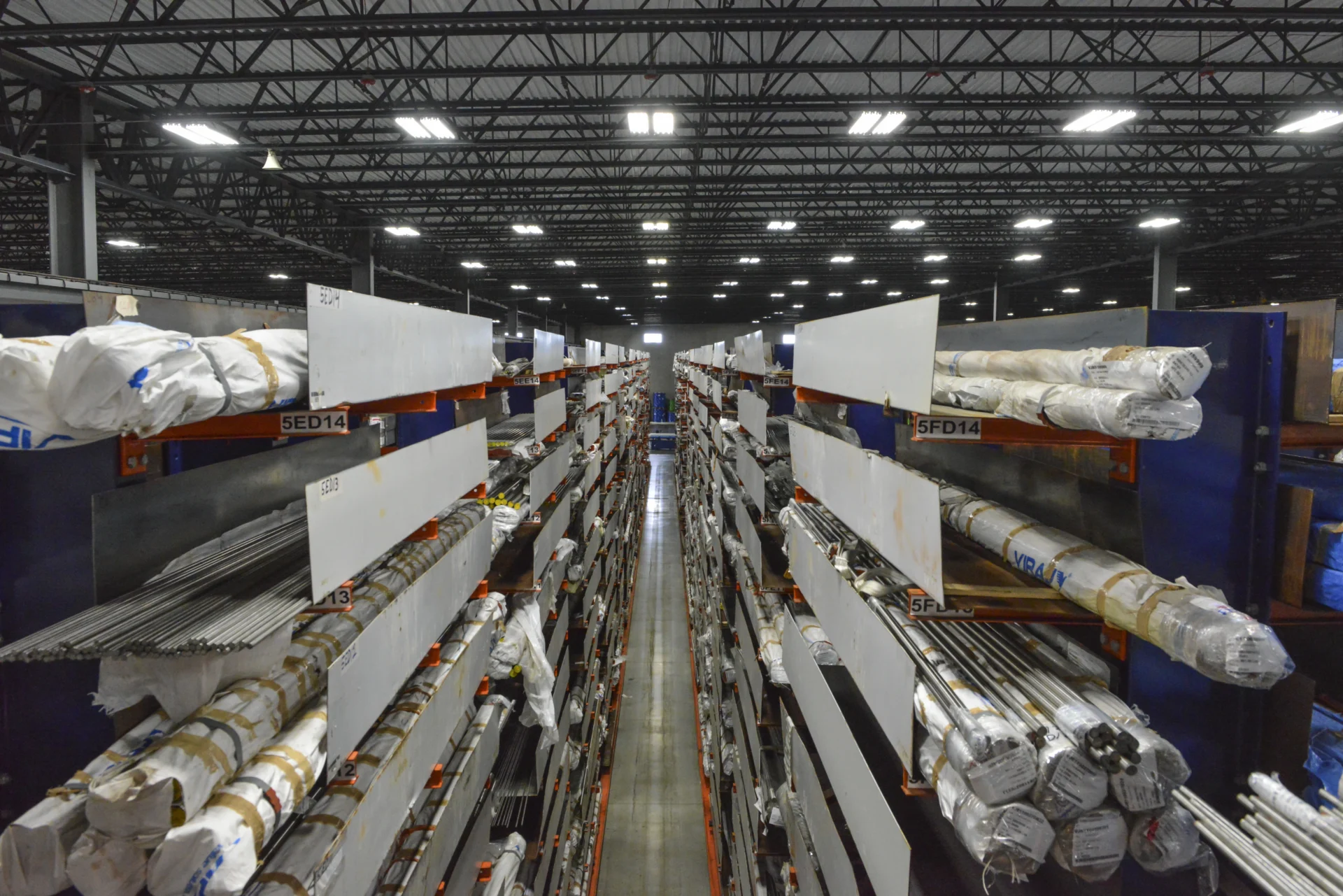
Raw materials still have to arrive at the facility. Dies and tooling have to be stored, and steel coils, sheet metal, molds, and other heavy components have to be positioned so they can be accessed when they are needed. Finished materials have to move through the facility without creating unnecessary congestion. In other words, modern manufacturing still has a very physical side.
And that physical infrastructure can either support the way a facility operates, or make it harder.
Storage Is Part of the Manufacturing Process
Storage is sometimes treated as something that happens around production, rather than as part of said production itself.
When heavy materials are stacked “wherever space happens to be available,” workers may have to move other materials to reach what they need. Or, when tooling is stored too far from the equipment that uses it, retrieval becomes another step in the production process. Simply put, when inventory occupies valuable production-floor space, material flow can become more complicated.
The truth is, these are small inefficiencies, not dramatic problems, and are easy to overlook. But when repeated throughout a facility again and again, they can have a meaningful effect on how people, materials, and equipment move.
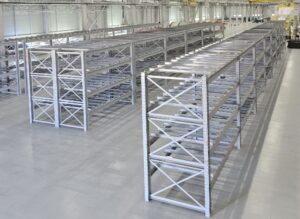
Engineered, custom storage solutions provide an opportunity to be more deliberate. Instead of asking, “Where can we put this material?” manufacturers can ask, “Where should this material be stored so that it can be safely accessed, handled, and returned when it is needed?”
Designing for What Manufacturing Is Becoming
Manufacturers are also facing a different planning environment than they did a generation ago. Facilities are supporting more product variations, often have changing material requirements, and are regularly adding new automation tools and expanding production. Reshoring, tariffs, and supply-chain issues can also alter what materials manufacturers keep on hand, and how much inventory they need to store.
A meaningful storage system is configured around the dimensions, weights, and handling methods of the materials being stored, while allowing the system to be expanded or reconfigured as requirements evolve. That flexibility matters when a manufacturing floor that looks right today may look very different several years from now.
Manufacturing Is Still About Making Things
There is plenty to celebrate about where manufacturing is headed. Technology is opening new possibilities, automation is taking on increasingly sophisticated tasks, and manufacturers are continuing to find new ways to improve productivity.
But on Manufacturing Day 2026, it is also good to remember that manufacturing remains fundamentally about making things, and making things requires a physical place to do it. The machines matter, the technology matters, the people matter. But so do the floors, layouts, storage systems, material-handling equipment, and countless other elements that allow all of them to work together.
Here at Dexco, we have spent more than 50 years working on one piece of that equation: helping manufacturers create safe, durable engineered storage systems for the materials that keep production moving. It may not be the most visible part of the manufacturing process, but building a better factory floor has always been part of building a better manufacturing operation.
This Manufacturing Day, that’s worth celebrating, too.