Industry Moments Driving the Conversation
As June turns to July, several notable observances put a spotlight on the systems that keep the American economy moving.
National Logistics Day on June 28th recognizes the critical role that logistics professionals play in moving goods through complex supply chains, while Made in the USA Day on July 2 celebrates domestic manufacturing and the people and companies producing goods across the country. This year, those celebrations carry additional significance as the nation marks “America 250,” the 250th anniversary of the signing of the Declaration of Independence on July 4, 2026.
While these observances focus on different aspects of the economy, they share a common theme: the importance of the infrastructure that supports American industry.
When people think about logistics, they often picture trucks, railroads, ports, and distribution centers. When they think about manufacturing, they envision production lines, machinery, and skilled workers.
Yet, the fact is that behind every successful operation is something less visible but equally important – the ways materials, components, and products are stored, organized, protected, and accessed throughout the manufacturing and distribution process.
Efficient operations begin long before a product ships to a customer.
The Hidden Layer of Operations
Raw materials must be stored safely and remain readily accessible. Work-in-process inventory needs to move efficiently through production environments. Finished goods require organized storage that maximizes available space while supporting fast, accurate retrieval. Every unnecessary movement, damaged material, or safety incident creates costs that ripple throughout the operation.
As manufacturers continue to face pressure to improve productivity, reduce waste, and strengthen supply chain resilience, storage infrastructure has become a strategic consideration, rather than simply a warehouse necessity.
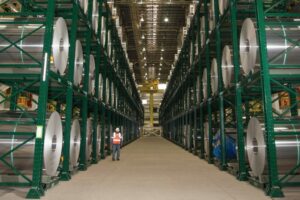
This is particularly true in industries handling heavy, oversized, or specialized materials. Steel coils, sheet metal, tubing, bar stock, dies, tooling, and other industrial assets require storage systems engineered not only for capacity, but also for safety, accessibility, and operational efficiency. The right storage solution can help reduce product damage, improve inventory visibility, increase floor space utilization, and support safer working environments.
These goals align closely with the broader themes recognized by National Logistics Day. The observance was created to acknowledge the logistics industry and its role in supporting both national and global economies. While transportation often receives much of the attention, logistics encompasses the entire flow of materials and information throughout the supply chain, including how inventory is stored and managed inside facilities.
Inside the Facility
The same principle applies to Made in the USA Day, which encourages support for domestic manufacturing and recognizes the companies and workers that keep production within the United States. American manufacturers continue to invest in technologies and operational improvements to help them remain competitive in a rapidly evolving global marketplace. And as the reshoring of manufacturing gains steam, efficient facilities, optimized workflows, and safe material handling practices will all contribute to that competitiveness.
As America commemorates its 250th anniversary, there is also an opportunity to reflect on the nation’s long history of industrial innovation. From early mills and foundries to today’s automated manufacturing facilities, American industry has continually evolved to meet new challenges. The technologies have changed dramatically, but the objective remains the same: building the systems and infrastructure needed to support growth, productivity, and economic opportunity.
Built for What’s Next
At Dexco, we see that commitment to innovation every day. Whether we’re custom designing racking systems for manufacturing facilities, warehouses, or distribution operations, our focus remains on helping customers create safer, more efficient environments that support long-term operational success.
This summer’s observances offer an important reminder that behind every shipment delivered, every product manufactured, and every milestone in American industry is a foundation of infrastructure that makes it all possible. And often, that foundation starts with how materials are stored.