Understanding Vertical vs. Horizontal Racking to Maximize Your Warehouse’s Potential
Warehouse design is more than just organizing your materials or products in the best way possible; it’s about optimizing space, improving workflow, and creating a safe, efficient environment for employees. One of the most important decisions in this process is choosing the correct racking style. Each has distinct advantages, and better educating yourself on them can help industrial organizations maximize storage capacity while maintaining accessibility and safety.
Understanding Horizontal Racking
Think of horizontal racking as the default setting; it is designed with easy access in mind. Items are stored side by side at lower heights, making picking and restocking straightforward. This layout is ideal for high-turnover inventory or frequently accessed products. Workers can retrieve items quickly, reducing labor time and minimizing the need for specialized equipment.
Common examples of horizontal racking systems include:
- Coil Cradles or Coil Saddles: Low-profile steel structures that hold metal mother coils for quick loading and unloading.
- Coil Pyramids or Coil Stacking: Modular steel wedges that store coils on the floor in nests.
- Carton Flow or Gravity Flow: Used for small, lightweight parts picking or fulfillment kitting stations.
- Stamping Die Storage Beds: Used to store stamping dies, molds, and tooling that require ground-level accessibility.
- Sheet Racks: Flat-storage systems for sheet metal, plate, or panel materials that need to be accessed frequently with minimal lifting height.
- Selective Pallet Racks: The most widely used pallet racking system, offering direct access to every pallet for fast-moving, low-weight SKUs.
However, there are limitations. The above occupy more floor space, which can make warehouses feel crowded as inventory grows. Expanding storage capacity often requires adding more rows, which can disrupt workflow or reduce safety margins. While accessibility is excellent, the trade-off is a less efficient use of cubic space – and built-in limits on how much expansion is possible.
Additionally, many of these racking styles have proven to be unsafe for both employees and products over thee years, especially those that involve the stacking of coils. Coils are heavy and if stacked or arranged improperly, or with disregard to weight tolerances, balance and size differences, can create a critical safety situation.
Unlocking Space with Vertical Racking
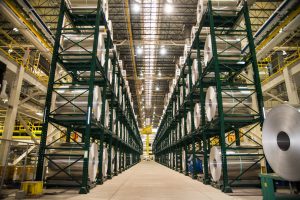
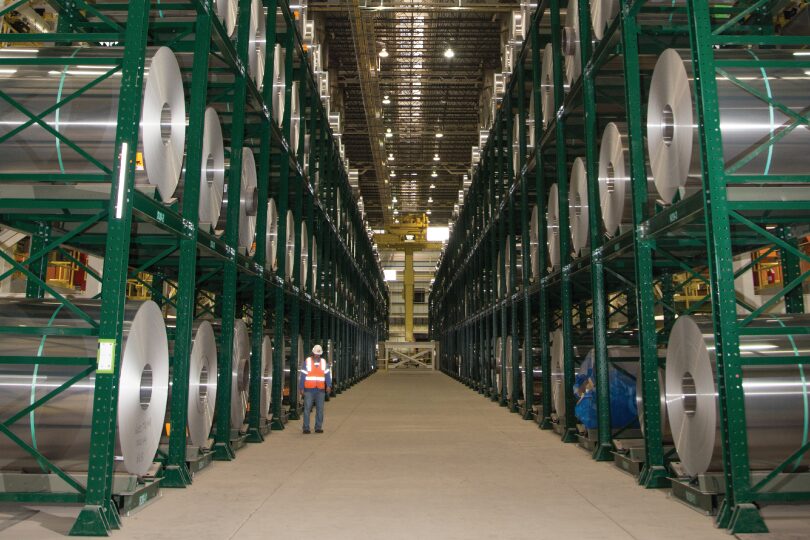
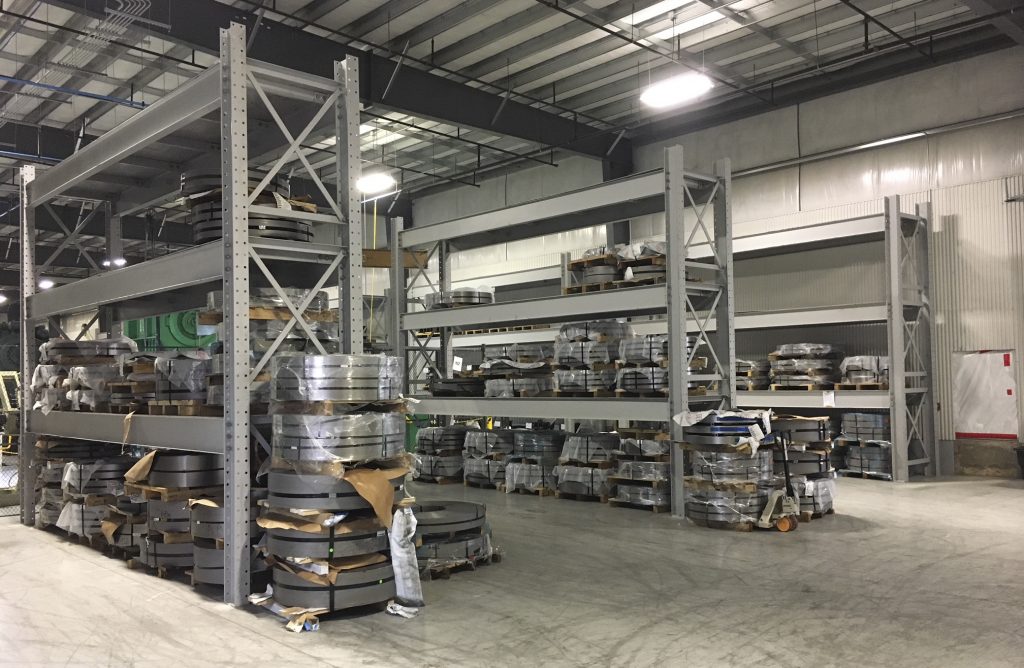
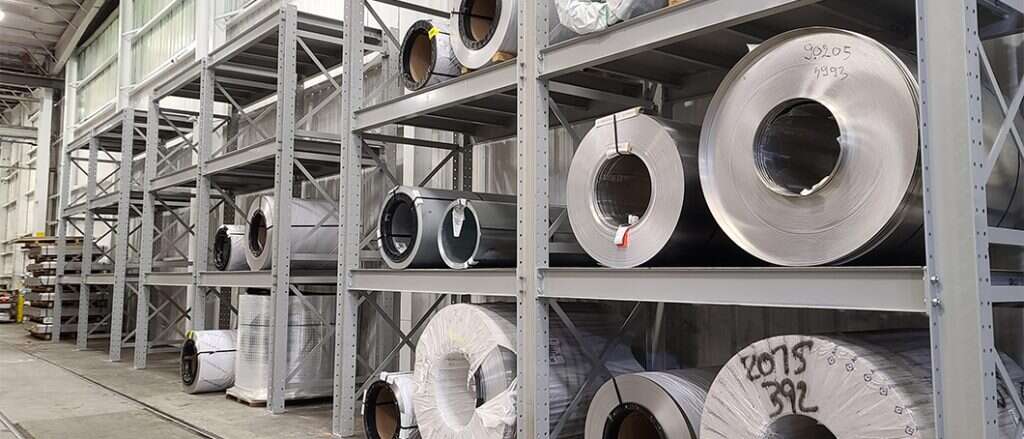
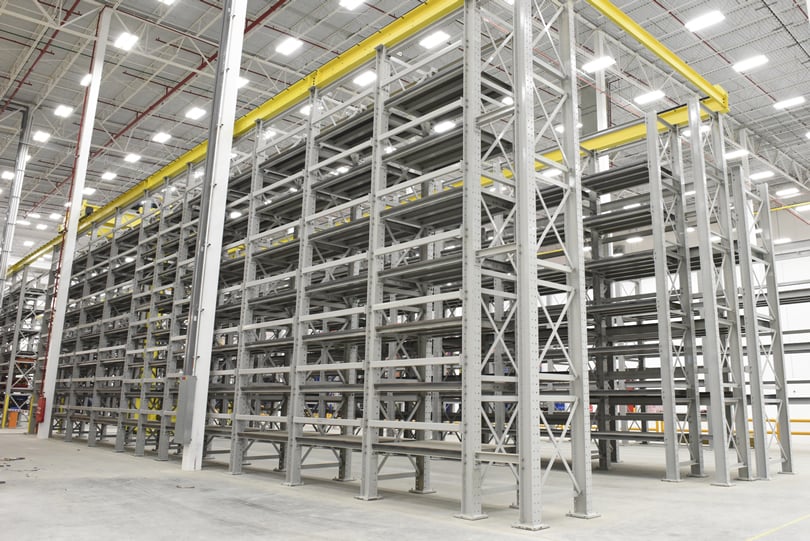
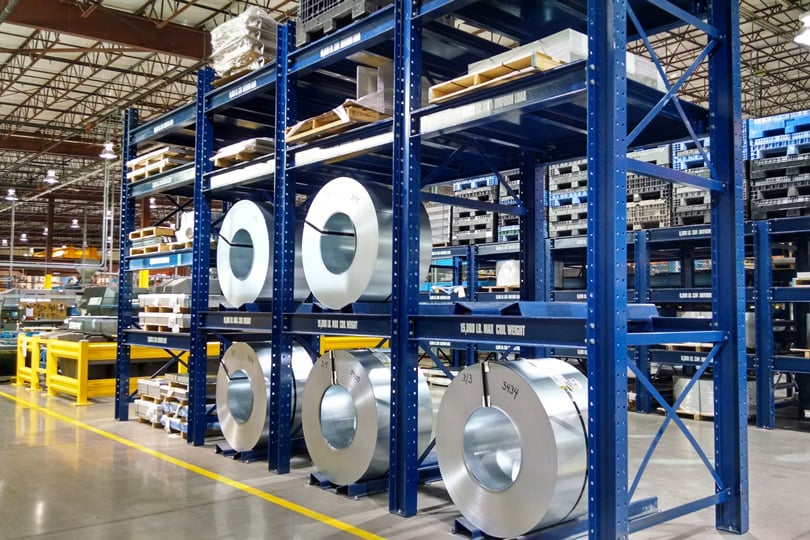
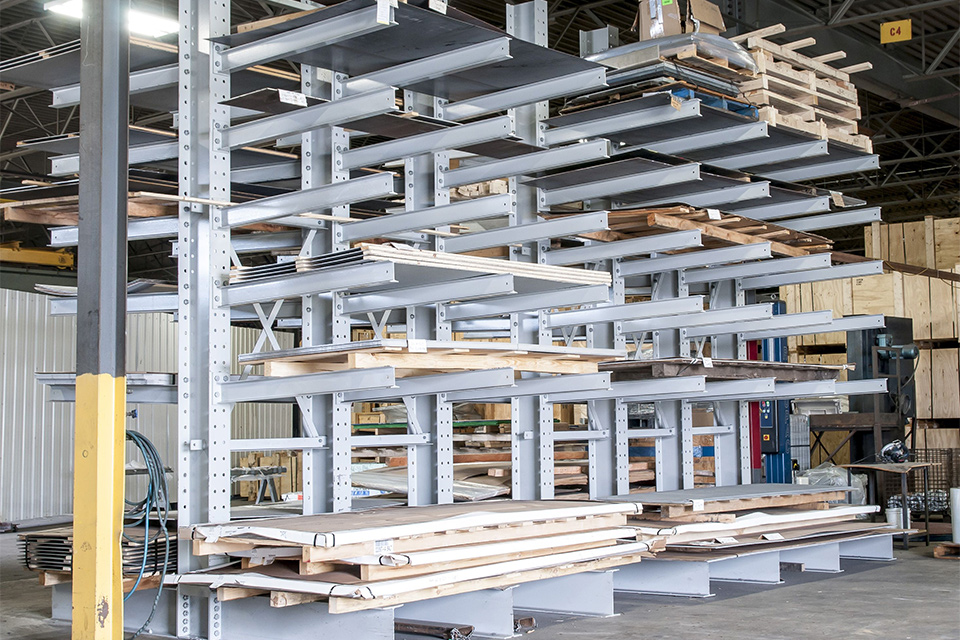
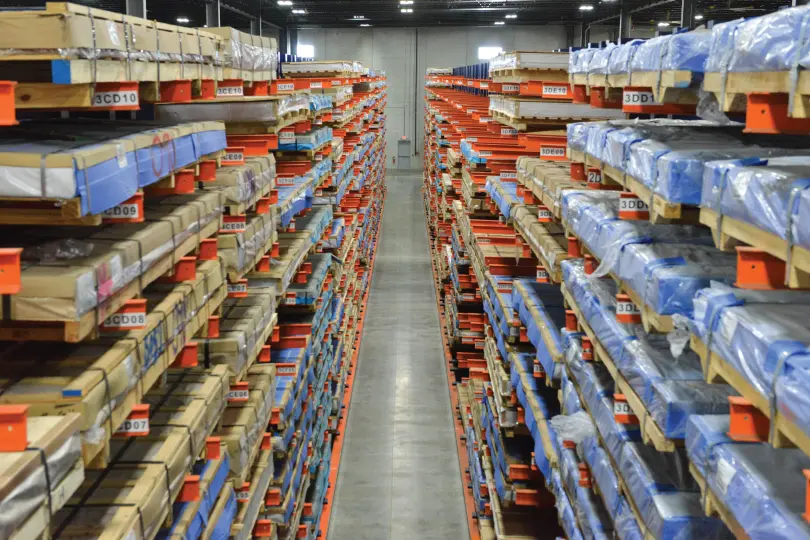
Vertical racking quite literally takes a different approach: it maximizes the cubic space of a warehouse by building upward. Inventory can be stacked safely and securely, making the most of available ceiling height. Facilities can significantly increase storage density, without expanding their facility’s footprint.

Click any image to enlarge
Common examples include:
- High-Bay Cantilever Racking: Engineered to efficiently store heavy components such as steel bar, tube, lumber, and other raw stock materials.
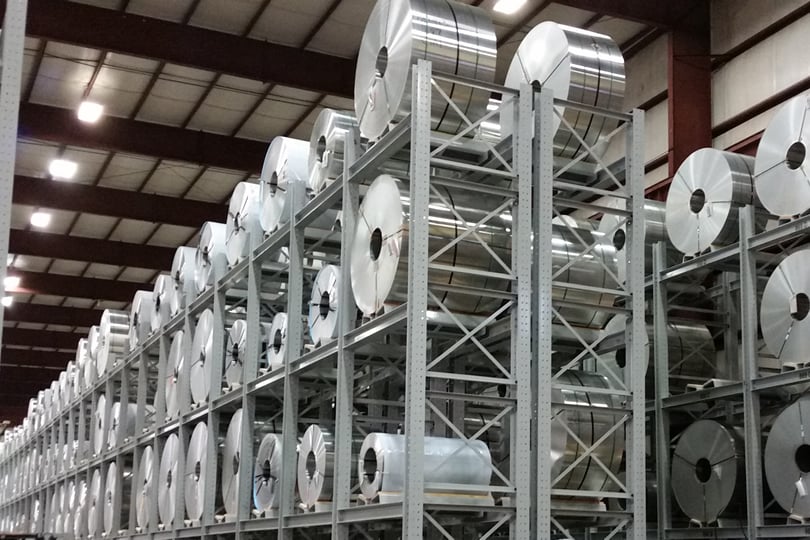
- Coil Storage Towers: Systems engineered to support metal coils from floor to ceiling, maximizing space while keeping coils organized, protected, and easily accessible.
- Multi-Tier Tooling Racks: Stacked storage for dies, molds, fixtures, and tooling that reaches full building height. Safer and more space-efficient than floor storage, with heavy load capacity and improved visibility.
- Full-Height Sheet and Plate Racks: Store plate steel, sheet goods, and other heavy flat materials across multiple levels instead of flat on the floor, freeing production space and reducing damaging risk.
The above are particularly advantageous for bulk storage or less frequently accessed items – and are designed with safety in mind, supporting heavier loads, while maintaining stability. Specialized equipment, such as forklifts or automated retrieval systems, help organizations ensure that products remain accessible – even when stored at great heights.
How Do I Choose?
There are several factors to consider when making your selection – but at the end of the day, what’s most important is finding the correct balance for your organization’s unique operations model and facility layout. Key considerations include:
- Inventory Turnover: High-turnover items need to be stored in a way that enables fast picking. These also tend to be more lightweight items, and are better suited for pallet racking. On the other hand, bulk or seasonal inventory is ideal for compact, long-term storage that doesn’t need to be accessed often.
- Space Constraints: Facilities with limited floor space need solutions that can help them overcome these limitations. Building up instead of out can be a difference-maker. Larger, more expansive warehouses – with plenty of room to grow – can better accommodate more traditional, horizontal layouts.
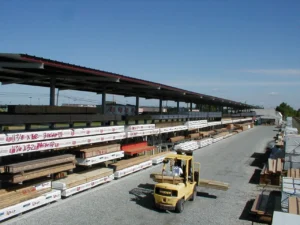
Another option for those running out of available space indoors to look outside. You may have space for sheds or other outdoor staging areas – which can be made with galvanized steel racking – and be just as durable and safe as indoor systems. - Safety and Ergonomics: Evaluate how employees interact with inventory. Easy-to-access racking may sometimes lead to unsafe conditions – or leave the door open for materials and equipment to be damaged. On the other hand, storing products at greater heights may require special training and the purchase of lifting equipment or automated tools that can enable safe access.
It is important to note that custom racking and storage solutions can be designed with these constraints in mind, making sure both production turnover time and employee safety are prioritized within your facility. - Scalability: Think about future growth and how best to prepare for it – without costly facility changes. If expansion is a part of your organization’s growth plans, then incorporating a vertical approach from the start may be a better, more cost-efficient route.
The reality is that many modern warehouses and factories implement a variety of storage systems, placing frequently picked items in more accessible racks moving the rest to long-term storage. In some cases, a hybrid approach can maximize efficiency, safety, and capacity simultaneously. It’s important to review your facility’s exact needs before making a choice.
At the end of the day, by understanding the trade-offs between vertical and horizontal racking, businesses can make informed decisions that balance accessibility with storage density.
For facilities looking to maximize both safety and efficiency, working with a trusted industrial storage partner is essential. Dexco offers durable, long-lasting racking solutions designed to meet the unique needs of modern warehouses. Dexco can help you create a customized storage setup that delivers more value per square foot, improves workflow, and keeps your team safe.