Insights From The Shop Floor On Choosing Smarter Storage Solutions
If you’re like me — walking the factory floor, watching forklifts bump racks, and seeing inventory piled on pallets in every spare corner — then you know that storage problems aren’t abstract. They’re real, and they cost companies real time, real money, and real peace of mind.
Over the years, I’ve seen the same themes pop up across facilities of all sizes: damaged parts, crowded aisles, inefficient workflow, and safety risks that shouldn’t exist in this day and age. The good news? Most of these challenges are solvable with the right storage strategy.
Here are a few things I’ve learned along the way that might help you address a similar situation in your organization:
Protect What Matters Most
One of the most common issues I encounter is damaged materials — not in transit, but in storage. Precision parts, custom-fabricated pieces, and high-value tooling can suffer scratches, dents, and warping when they’re stored on the floor, on makeshift shelving, or in racks that don’t fit their size and weight profile. Purpose-built racks with the correct supports, cradle arms, and adjustable features dramatically reduce these problems because they hold parts where they belong, without stress points or imbalance, and make sure they’re not haphazardly balanced in a pile on the floor, held together with hope.
Make Safety a Design Principle, not an Afterthought
Fast-paced manufacturing environments are full of heavy loads moving quickly. When parts are stacked on pallets or stored in racks or shelving not designed for industrial wear and tear, you can introduce tipping hazards, unsafe lift angles, and unstable loads. Engineered racking systems designed for specific materials and load ratings – and specific facilities – bring confidence back to your workflow. They reduce risk for your team and also help with compliance and insurance requirements. Safety first has never been truer.
Maximize Space Without Sacrificing Access
Too often, I see facilities that treat storage as “something to squeeze in,” rather than a strategic asset. Vertical storage is a game changer: it opens up cubic space that’s otherwise wasted, consolidates inventory into easy-to-pick locations, and liberates floor space for production activities. Using engineered racks lets you go higher and smarter, and makes your operations more efficient.
Customize for Unique Challenges
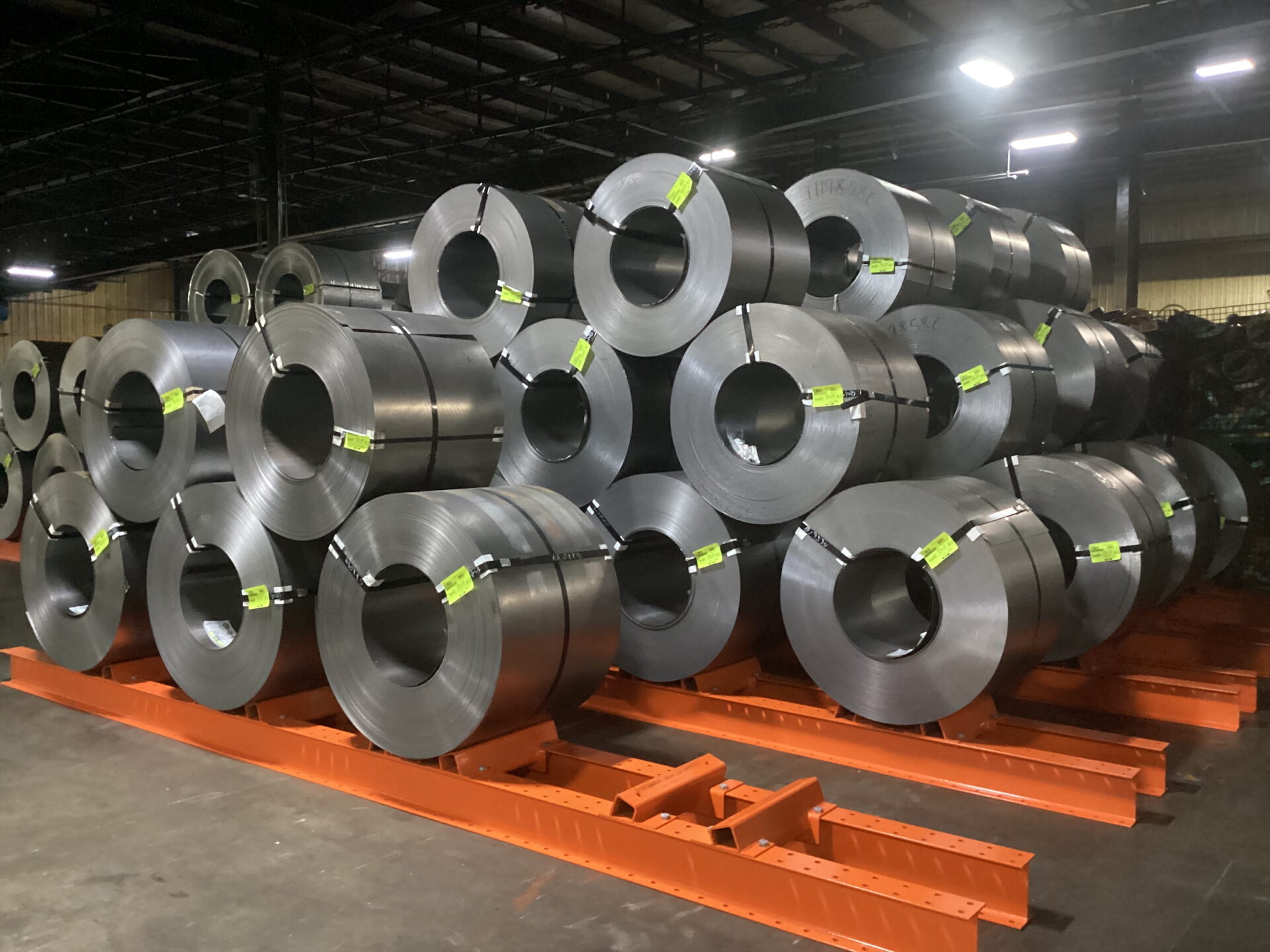
Every factory or plant’s profile is different. Some store coils and heavy plates, others have vertical die storage. A one-size-fits-all storage solution rarely fits any of them well. Custom systems – whether cantilever arms for long stock, heavy-duty widespan shelves for tooling, or cradles for coils – will help ensure each material type has a tailored home, which cuts down handling time and mistakes. The benefits of working with an experienced team to design a solution that’s a perfect fit will pay off in the end.
Reduce Hidden Costs of Poor Storage
An outdated rack might look “fine” – until it’s not. A shelf buckles, an inventory item falls, or a forklift operator has to drag parts out from an awkward spot – all issues that happen daily when storage solutions aren’t right. Issues like these can quickly translate into hidden costs: downtime, maintenance, damaged goods, injuries, and even higher energy use as workers navigate inefficient layouts. Modern engineered racks aren’t just stronger and safer; they’re more adaptable as your operation grows.
Tracy Buck,
National Sales Manager
Lesson Recap
If there’s one thing I’ve learned after walking countless warehouse floors, it’s this: proper storage needs to be an active part of your operation’s efficiency, safety, and the bottom line. Choosing the right rack isn’t just a purchase; it’s an investment in how smoothly your facility runs day after day.
Is your current setup holding you back? Starting a new project and don’t know where to begin? Check out our free Industrial Storage Project Management Guide here, and reach out here if you’re ready to talk about what storage solution is the best fit for your organization.